Iranian Diaspora, is not your enemy.
- INFO THT
- Apr 18
- 3 min read

Here’s the uncomfortable truth:
The notion that the Iranian diaspora is somehow “separate” from Iran—or worse, an obstacle to activism—isn’t just incorrect. It reflects a misunderstanding of how modern political movements actually function.
For millions of Iranians, leaving the country was never about abandoning it. It was about survival, seeking opportunities, or simply escaping restrictions that made a normal life unattainable. Today, an estimated 5 to 7 million Iranians reside outside Iran, forming one of the most connected diasporas globally. But distance hasn’t erased their identity.
If anything, it has intensified it. Families remain divided by borders. Conversations still occur daily. Money flows back home. News, culture, and politics move instantly between Tehran, Toronto, London, and Los Angeles. The idea that these individuals are somehow “less Iranian” ignores the reality of a deeply interconnected nation that happens to be geographically dispersed.
More importantly, it overlooks a crucial fact: many Iranians within Iran cannot speak freely.
Censorship, surveillance, and the threat of imprisonment dictate what can and cannot be said publicly. During times of unrest, internet blackouts have repeatedly hampered communication, making it difficult for events on the ground to reach the outside world. One recent report described how shutdowns “silence millions and hide what’s happening in real time,” cutting off a country from global visibility. That’s not just a technical issue—it’s a political one.
This is where the diaspora steps in.
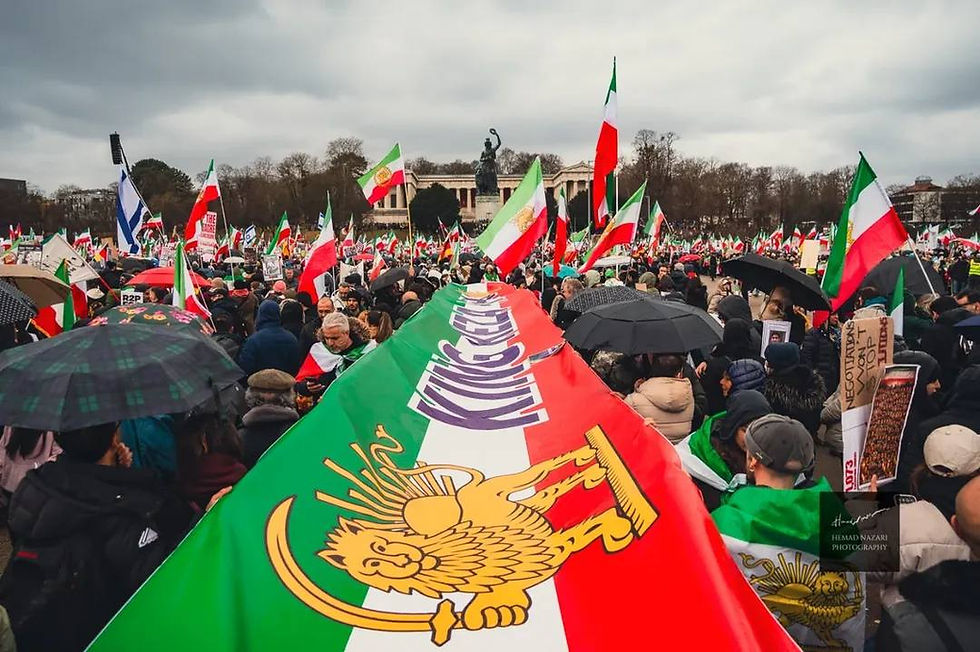
When voices inside Iran are constrained, those outside the country become a kind of amplifier. They translate, share, and broadcast what would otherwise remain hidden. They engage with international media, organize protests, and push conversations into spaces where they can’t be easily silenced. In that sense, diaspora activism isn’t competing with activism inside Iran—it extends it.
Academic research often describes this relationship as symbiotic. Movements originate within the country, shaped by lived realities and risks. But they gain global traction through diaspora networks that can operate freely. One study on transnational activism put it simply: diaspora communities “expand and narrate domestic struggles on a global stage.” That’s not interference—it’s continuity.
Critics sometimes argue that diaspora voices don’t “represent real Iranians.” But that argument assumes representation is something clean, unified, and geographically fixed. It isn’t.
Even inside Iran, there is no single voice. Political opinions vary widely, and many remain unspoken due to fear. Diversity of opinion is not a flaw—it’s what real societies look like. The diaspora reflects that same complexity. It includes people across generations, ideologies, and experiences. Disagreement doesn’t invalidate them; it proves they’re not a monolith.
More importantly, representation isn’t just about where you live—it’s about what you’re connected to. Most diaspora Iranians are deeply connected. They have parents, siblings, and friends still in Iran. They follow events closely because those events directly affect the people they love. Their stake in Iran’s future is personal, not abstract.
So why does this narrative—that the diaspora is somehow illegitimate—persist?
Part of the answer is political. Dividing a population into “inside” and “outside” camps weakens it. It creates friction where there could be alignment. It shifts focus from shared goals to internal disputes. In highly polarized environments, these divisions don’t always grow naturally—they can be amplified, encouraged, or strategically exploited.
That doesn’t mean diaspora activism is perfect. It isn’t.
There are real limitations. Activists outside the country have visibility, but they don’t face the same risks or constraints as those inside. They can influence narratives, but they can’t directly control events on the ground. Coordination is difficult, leadership is fragmented, and the distance—physical and psychological—can create gaps in understanding.
But these are structural challenges, not moral failures.
Expecting a unified, perfectly aligned movement across borders—especially under conditions of repression—is unrealistic. The more accurate way to understand the situation is not as a conflict between two groups, but as a shared ecosystem.
Inside Iran, people generate movements, take risks, and define the reality of resistance. Outside Iran, the diaspora amplifies those movements, builds international awareness, and applies external pressure. One side operates under constraint; the other operates with relative freedom. Together, they form a complete political force that neither could achieve alone.
Dismissing the diaspora doesn’t strengthen activism—it weakens it. It cuts off one of the few channels through which Iranian voices can reach the world without restriction. It narrows the conversation instead of expanding it.
A more grounded perspective is this:
The Iranian diaspora is not an outsider to the struggle. It is what the struggle looks like when it crosses borders.
Written by Shayan Goodarzifar


Comments